A fractured leg or arm doesn’t just stop movement — it stops life for a while. Driving, working, climbing stairs, even turning in bed becomes a challenge. That’s why fixing long bone fractures has always been one of the top priorities in trauma care. These bones — the femur, tibia, humerus, and their companions — keep us upright and mobile, so when one breaks, getting it to heal properly matters more than most people realize.
A Quick Look at the Problem
Long bone fractures usually come from road accidents or falls, though sports injuries and osteoporosis in older adults also play a part. Some breaks are clean and cooperative; others splinter in several directions, making alignment tricky. Years ago, surgeons had limited choices: external frames or metal plates fixed over the bone with wide incisions. It worked, but recovery was slow and the healing sometimes uneven.
That picture began to change with the arrival of intramedullary expert nails, a design that genuinely re-defined internal fixation.
Fixing from the Inside Out
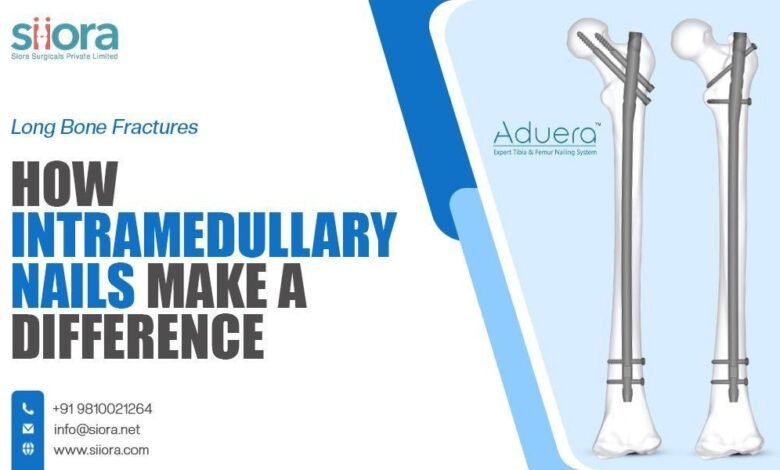
Instead of attaching hardware around the bone, an intramedullary nail sits inside it. Imagine sliding a slender, strong rod through the bone’s hollow center — the medullary canal — and locking it at both ends with small screws. The bone now gains an internal support beam that carries the body’s weight naturally, the way the bone itself used to.
Because the nail shares the load during movement, patients can often start putting weight on the limb within weeks instead of months. This small change — being able to stand or walk sooner — makes an enormous psychological difference for patients recovering from trauma.
See also: How Cp As Use Technology To Improve Efficiency
Why Surgeons Prefer It?
Ask any orthopedic surgeon, and you’ll probably hear the same reason: stability with freedom. The nail holds the fracture rigid enough for healing but still lets microscopic movement stimulate bone growth. That gentle “stress” is exactly what nature uses to rebuild tissue. The internal position also means the blood supply and surrounding muscles stay largely intact, which helps the bone heal faster and stronger.
Procedures are less invasive than before. Small entry points, guided by imaging tools, allow accurate placement of the implant with minimal disruption. Most patients go home quicker, and scars are smaller — benefits that don’t always make it to the research graphs but mean a lot in real life.
Evolving Technology
Current-generation IM nails look nothing like their early versions. Modern titanium alloys provide strength without heaviness, while surface finishes reduce friction and infection risk. Many are shaped to match a specific bone’s natural curve, so the surgeon spends less time bending and adjusting the implant.
Digital navigation and 3D imaging have added yet another layer of precision. Surgeons can now plan the procedure on a screen before entering the operating room, ensuring that every screw and entry angle lines up perfectly. It’s a blend of engineering and medicine that keeps growing closer.
Life After Surgery
For patients, the real victory comes during recovery. Because the fixation is strong and internal, rehabilitation can start early. Muscles regain tone faster, joints don’t stiffen as much, and day-to-day independence returns sooner. Hospitals see shorter stays, and families see fewer setbacks — a quiet revolution unfolding one step at a time.
Elderly patients, whose bones are delicate, particularly benefit from this approach. The stability of the nail reduces the risk of re-fracture or orthopedic implant failure, while the minimally invasive technique lessens surgical stress on the body.
Looking Toward the Future
Every few years, intramedullary technology gets another boost — smarter alloys, adjustable locking systems, even prototypes that monitor healing by transmitting data to clinicians. The direction is clear: make fixation stronger, recovery quicker, and outcomes more predictable.
Healing a broken limb will never be “easy,” but the progress is undeniable. Intramedullary nails don’t just hold bones together; they give patients a faster path back to strength, movement, and normal life — which, after an injury, is exactly what people hope for.